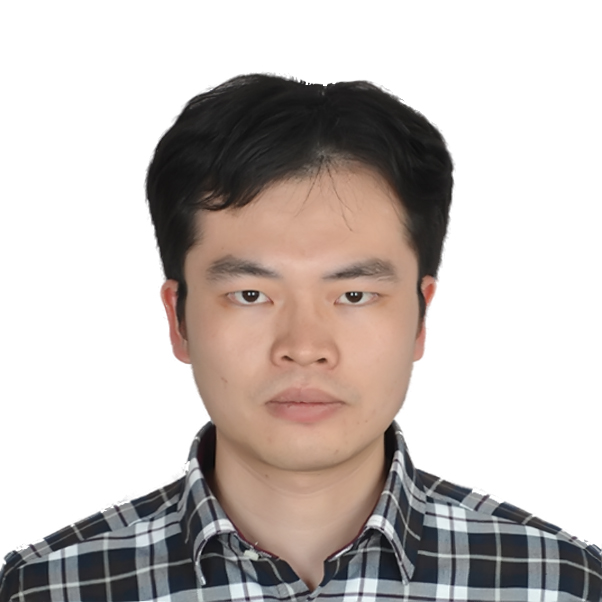
Portrait of Xiaohui Yan

Deputy Chief Scientist & Head of NLP · Huawei Xiaoyi 华为小艺 副首席科学家 · NLP 负责人

Xiaohui Yan晏小辉

Building personal AI experts for everyone — self-evolving agents that make life and work better.

为每个人打造专属的 AI 专家顾问,
用自我进化的智能体,让生活与工作更美好。

About关于我

I am Deputy Chief Scientist and Head of NLP at Huawei Xiaoyi, where I lead research and development on LLM agents, question answering, and search. My current focus is building and scaling self-evolving AI systems for deep research, AI scientists, and office automation.

我现任华为小艺副首席科学家、NLP 负责人,带领团队从事大模型智能体、智能问答与搜索的研究与研发。目前专注于构建并规模化可自我进化的 AI 系统,应用于深度研究(Deep Research)、AI 科学家与办公自动化。

Before Huawei, I was a research scientist at Didi AI Lab and an assistant professor at the Institute of Computing Technology, Chinese Academy of Sciences, where I received my Ph.D. and created the Biterm Topic Model (BTM), cited over 2,400 times, for short-text topic modeling.

加入华为之前,我曾任滴滴 AI Lab 研究科学家、中国科学院计算技术研究所助理研究员。博士毕业于中国科学院计算技术研究所,期间提出了短文本主题模型 BTM(Biterm Topic Model),被引用 2,400 余次。
Research interests研究方向

  • Self-evolving agents自进化智能体
  • Deep research深度研究
  • Search agents搜索智能体
  • Agent experience & memory智能体经验与记忆
  • AI scientistsAI 科学家
  • Large language models大语言模型
  • NLP & IR自然语言处理与信息检索

News动态

What's new最新动态

  • NEWReleased our survey From Trajectories to Experience: A Survey of Experience-Driven LLM Agents, with a curated list of 271 works.

    NEW发布综述 From Trajectories to Experience: A Survey of Experience-Driven LLM Agents,并开放配套论文清单(271 篇)。

  • NEWSearchJev, a fast and calibrated System-1 model for search agents, is on arXiv. Code, models, and SearchDecision-Bench are open-sourced.

    NEW发布 SearchJev:面向搜索智能体的快速、可校准 System-1 决策模型。代码、模型与 SearchDecision-Bench 均已开源。

  • RubricReviewer is accepted to Findings of EMNLP 2026. It builds a rubric for each manuscript before writing the review, making LLM peer review more objective and comprehensive.

    RubricReviewer 被 EMNLP 2026 Findings 接收:先为每篇稿件构建专属评审细则(rubric),再据此生成更客观、全面的审稿意见。

  • Open-sourced EvoScientist, a vibe research framework for AI-driven autonomous scientific exploration.

    开源 vibe research 框架 EvoScientist,用于 AI 驱动的自主科学探索。

  • Xiaoyi Deep Research ranked #1 on both Deep Research Bench and Deep Research Bench II.

    小艺深度研究在 Deep Research Bench 与 Deep Research Bench II 两个榜单均位列第一。

Research研究

Featured work代表工作

From fast decisions inside search agents, to agents that accumulate experience, to systems that do research end to end.

从搜索智能体内部的快速决策,到能够积累经验的智能体,再到端到端完成研究的系统。

NEW

SearchJev

A fast, calibrated System-1 model for search agents. It makes each search decision in a single forward pass: 5.2× faster than same-size autoregressive models, with 41–74% lower calibration error.

面向搜索智能体的快速、可校准 System-1 模型,一次前向即可完成每个搜索决策:比同规模自回归模型快 5.2 倍,校准误差降低 41–74%。

EvoScientist

A multi-agent, self-evolving framework for end-to-end scientific discovery. Agents form hypotheses, design and run experiments, and synthesize findings, and they keep improving their own research strategies along the way.

面向端到端科学发现的多智能体自进化框架:智能体自主提出假设、设计并执行实验、总结发现,并在过程中持续改进自身的研究策略。

Xiaoyi Deep Research小艺深度研究

A large-scale deep research system built on a multi-agent, self-evolving architecture. It decomposes complex questions and synthesizes evidence from many sources. Ranked #1 on Deep Research Bench I & II in 2026.

基于多智能体自进化架构的大规模深度研究系统,可自主拆解复杂问题、检索并综合多源证据。2026 年在 Deep Research Bench I 与 II 双榜位列第一。

Xiaoyi Question Answering小艺智能问答

The production QA system behind Huawei's Xiaoyi assistant. It covers open-domain question answering, knowledge-grounded dialogue, and intent-aware retrieval across hundreds of millions of queries.

支撑华为小艺助手的线上智能问答系统,覆盖开放域问答、知识增强对话与意图感知检索,服务数亿次用户请求。

Xiaoyi Search小艺搜索

LLM-powered search for Huawei's Xiaoyi assistant. It retrieves from the web and authoritative sources and returns direct answers with cited references, turning data into charts when helpful.

华为小艺的大模型搜索:联网检索网页与权威信源,直接生成带引用来源的答案,并可将数据整理为图表。

Publications论文

Selected publications代表论文

Full list on 完整列表见 Google Scholar.

Recent近期

Earlier research早期研究

Short-text topic modeling短文本主题建模

Biterm Topic Model (BTM) 2,400+ citations被引 2,400+ 次

A topic model for short texts such as tweets, queries, and titles. Instead of modeling sparse documents one by one, BTM models word co-occurrence patterns (biterms) over the whole corpus. It has been widely adopted for short-text mining and was extended to bursty topic discovery (BBTM) and online inference.

面向微博、查询、标题等短文本的主题模型。BTM 不再逐篇建模稀疏的短文档,而是直接在整个语料上建模词对(biterm)共现,有效缓解了短文本的稀疏性问题。该模型被广泛用于短文本挖掘,并扩展至突发话题发现(BBTM)与在线推断。

All earlier publications (2011–2020)全部早期论文(2011–2020)
  • AAAI 2020

    Graph LSTM with Context-Gated Mechanism for Spoken Language Understanding

    L Zhang, D Ma, X Zhang, X Yan, H Wang

  • AAAI 2020

    Convolutional Hierarchical Attention Network for Query-Focused Video Summarization

    S Xiao, Z Zhao, Z Zhang, X Yan, M Yang

  • CIKM 2019

    Generative Question Refinement with Deep Reinforcement Learning in Retrieval-based QA System

    Y Liu, C Zhang, X Yan, Y Chang, P S Yu

  • TIP 2019

    Long-Form Video Question Answering via Dynamic Hierarchical Reinforced Networks

    Z Zhao, Z Zhang, S Xiao, Z Xiao, X Yan, J Yu, D Cai, F Wu

  • ACL 2019

    Learning Representation Mapping for Relation Detection in Knowledge Base Question Answering

    P Wu, S Huang, R Weng, Z Zheng, J Zhang, X Yan, J Chen

  • Neurocomputing 2019

    Abstractive Meeting Summarization by Hierarchical Adaptive Segmental Network Learning with Multiple Revising Steps

    J Zheng, Z Zhao, Z Song, M Yang, J Xiao, X Yan

  • AAAI 2019

    Hashtag Recommendation for Photo Sharing Services

    S Zhang, Y Yao, F Xu, H Tong, X Yan, J Lv

  • AAAI 2019

    An Integral Tag Recommendation Model for Textual Content

    S Tang, Y Yao, S Zhang, F Xu, T Gu, H Tong, X Yan, J Lv

  • EMNLP 2018

    Zero-shot User Intent Detection via Capsule Neural Networks

    C Xia, C Zhang, X Yan, Y Chang, P S Yu

  • NAACL 2018

    Abstract Meaning Representation for Paraphrase Detection

    F Issa, M Damonte, S B Cohen, X Yan, Y Chang

  • CIKM 2016

    Ease the Process of Machine Learning with Dataflow

    T Guo, J Xu, X Yan, J Hou, P Li, Z Li, J Guo, X Cheng · Demo

  • AAAI 2015

    A Probabilistic Model for Bursty Topic Discovery in Microblogs

    X Yan, J Guo, Y Lan, J Xu, X Cheng

  • TKDE 2014

    BTM: Topic Modeling over Short Texts

    X Cheng, X Yan, Y Lan, J Guo

  • Ph.D. 2014

    Topic Modeling over Short Texts

    X Yan · Ph.D. thesis (in Chinese), Chinese Academy of Sciences博士学位论文,中国科学院

  • JCIP 2014

    Probabilistic Transaction Model for Recommending Data of Offline Shopping Mall

    P Wang, Y Lan, J Guo, X Yan, X Cheng · Journal of Chinese Information Processing

  • WWW 2013

    A Biterm Topic Model for Short Texts

    X Yan, J Guo, Y Lan, X Cheng

  • SDM 2013

    Learning Topics in Short Texts by Non-negative Matrix Factorization on Term Correlation Matrix

    X Yan, J Guo, S Liu, X Cheng, Y Wang

  • CIKM 2012

    Clustering Short Text Using Ncut-weighted Non-negative Matrix Factorization

    X Yan, J Guo, S Liu, X Cheng, Y Wang

  • CIKM 2011

    Context-aware Query Recommendation by Learning High-order Relation in Query Logs

    X Yan, J Guo, X Cheng

Experience经历

Career & education工作与教育

  1. 2017.02 — Present至今

    Deputy Chief Scientist & Head of NLP副首席科学家、NLP 负责人

    Huawei · Xiaoyi华为 · 小艺

    Leading research on deep research agents, search-augmented LLMs, large-scale QA, and conversational AI. Xiaoyi Deep Research ranked #1 on Deep Research Bench I & II in 2026. Earlier, led the dialog and QA group at Huawei Poisson Lab.

    负责深度研究智能体、搜索增强大模型、大规模问答与对话系统的研究。小艺深度研究于 2026 年登顶 Deep Research Bench I 与 II 双榜。此前负责华为泊松实验室对话与问答团队。

  2. 2016.04 — 2017.02

    Research Scientist研究科学家

    Didi AI Lab滴滴 AI Lab

    Worked on user profiling and intelligent car dispatch at scale.

    从事大规模用户画像与智能派单研究。

  3. 2014.07 — 2016.04

    Assistant Professor助理研究员

    Institute of Computing Technology, Chinese Academy of Sciences中国科学院计算技术研究所

    Built BDA (Big Data Analysis), a cloud-based machine learning platform with a web interface for building and managing ML pipelines (CIKM'16 demo).

    研发云端机器学习平台 BDA(Big Data Analysis),通过 Web 界面构建与管理机器学习流程(CIKM'16 Demo)。

  4. — 2014

    Ph.D.

    Institute of Computing Technology, Chinese Academy of Sciences中国科学院计算技术研究所

    Thesis: 博士论文:Topic Modeling over Short Texts